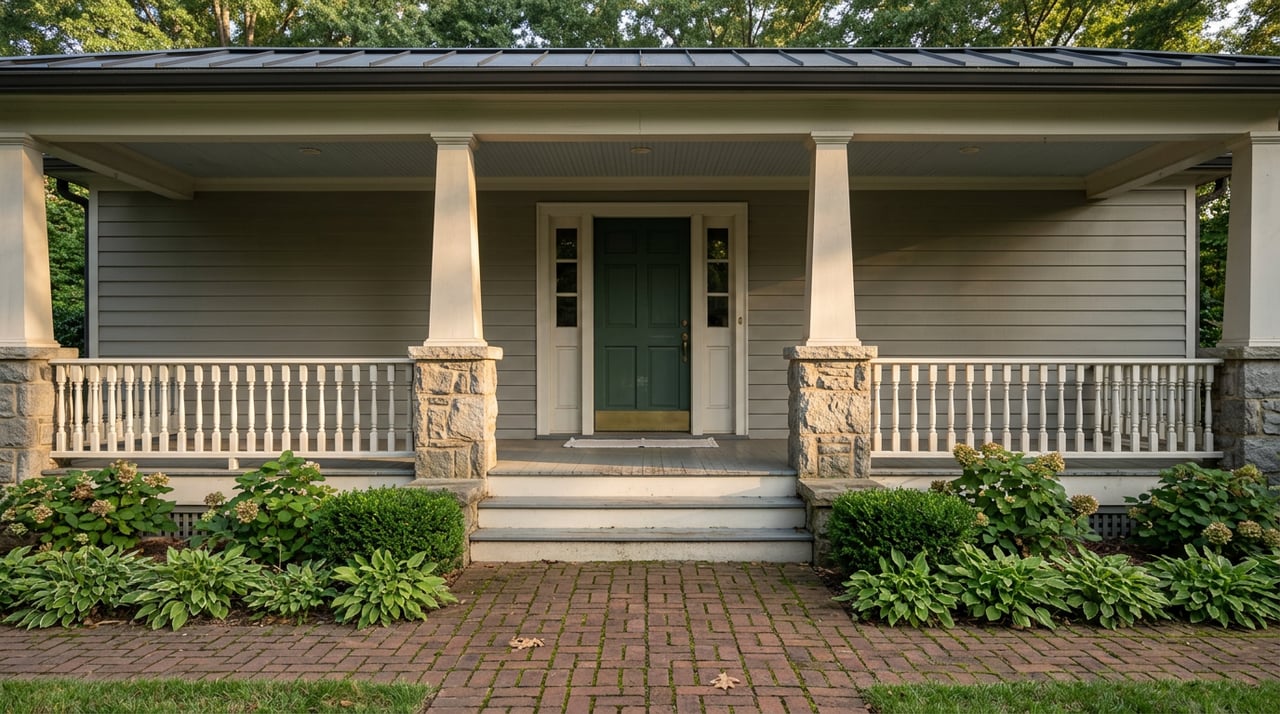
Walk through College Hill on a Saturday morning and you will see the pattern before anyone tells you about it. A century-old bungalow goes on the market under a canopy of white oaks, and within days a sign appears that says the house is already under contract. Fisher Park and Dunleath run the same way. In Dunleath, homes that sold in July 2026 spent an average of 38 days on the market, down from 47 days a year earlier, while the median sale price climbed to $404,500, up nearly 35 percent year over year. Inventory in these three neighborhoods stays thin, the architecture does not repeat itself down the street, and buyers who want a house with real bones move fast when one appears.
What that speed does not tell you is what happens after the offer is accepted. In Greensboro's historic districts, the sale rarely stalls at the inspection table. It stalls a few weeks later, when a repair negotiated during due diligence turns out to answer to a second calendar that has nothing to do with the closing date in the contract.
Three Districts, One Layer Most Buyers Don't See
College Hill, Fisher Park, and Dunleath are Greensboro's three locally designated historic districts. That designation is different from a National Register listing like Irving Park or Sunset Hills carries, which is largely honorific. In these three neighborhoods, exterior changes to a house go through the city's Historic Preservation Commission and require a Certificate of Appropriateness before work begins. Replace a window, change the paint color on a street-facing wall, swap out a porch railing, and the COA process applies whether the house is a $250,000 fixer or a fully restored showpiece.
In September 2025, the Historic Preservation Commission adopted an updated Historic District Program Manual and Design Standards, the first comprehensive revision since 2003. The update did not loosen the rules so much as clarify them, translating language that used to require a preservation consultant to interpret into something a homeowner can read and act on without hiring one. It also gave newer "contributing" structures, the midcentury additions sitting among the Craftsman bungalows and Colonial Revivals, somewhat more flexibility than the oldest buildings in the district.
None of that is controversial. There have been no major demolition fights or boundary disputes in College Hill, Fisher Park, or Dunleath through the 2025 to 2026 stretch, and that quiet is itself a signal. These are neighborhoods where owners tend to buy in because they want the architecture protected, not despite the rules. The demand comes from healthcare workers near Cone Health, university faculty, and relocators who specifically want character over square footage, which is part of why these blocks hold value the way they do.
The Repair Negotiation That Runs Into A Second Calendar
Here is where the timing problem actually shows up. A buyer's inspection turns up something on the exterior, deteriorated siding, a soffit that needs replacing, a porch column with rot at the base. In most transactions, the seller and buyer negotiate a credit or a pre-closing repair and move on. In a historic district, that repair is also a request to the city, because any exterior work needs a Certificate of Appropriateness first.
The due diligence period in a North Carolina purchase contract runs on the calendar the buyer and seller agree to in writing. The COA process runs on the Historic Preservation Commission's calendar, which is a public review, not a same-day permit counter. Nobody is doing anything wrong when a repair credit gets negotiated without accounting for this. It is just that the two clocks were never synchronized to begin with, and the gap tends to surface only after everyone has already agreed to a repair-based contingency.
The fix is simple and almost nobody does it before they are already under contract: ask whether the specific repair has COA precedent in that district before you write it into the offer. A like-for-like window replacement in a style the Commission has already approved elsewhere in the neighborhood moves faster than a proposed material change nobody has tried before.
The Blind Spot Underneath The House
The second gap has nothing to do with the city and everything to do with what is buried in the yard. Homes in College Hill, Fisher Park, and Dunleath were mostly built between the 1890s and the 1930s, and many still run on their original clay or cast iron sewer laterals. That puts them decades past the point where local inspectors generally recommend a camera scope before a sale closes.
A standard home inspection does not include a sewer scope. It is a separate service, and in Greensboro it typically runs a few hundred dollars, a modest cost against the alternative. When a clay or cast iron lateral does fail, from root intrusion, corrosion, or a sagging section that has collected debris for decades, replacement can run anywhere from five thousand to twenty thousand dollars depending on length and access. That gap between a routine expense and a five-figure surprise is the entire argument for scoping the line during due diligence rather than finding out after closing.
North Carolina's Residential Property Disclosure Statement, the form every seller of one to four dwelling units in the state is required to complete under state law, does ask about the sewer or septic system. But the form only obligates a seller to disclose what they already know is a problem. It does not require them to test what they have never checked. A seller who has lived in a house for twenty years without a backup has nothing to disclose, even if the lateral underneath the yard is still the original clay pipe from the day the house was built.
| The blind spot | What actually happens | What closes the gap |
|---|---|---|
| An exterior repair negotiated after inspection | Requires a Certificate of Appropriateness before work can start | Check COA precedent for that repair type before agreeing to the credit |
| The original sewer lateral | Not part of a standard inspection, and disclosure only covers known problems | Order a sewer scope during due diligence, especially on pre-1970 construction |
Why This Matters More When Homes Move In Days
Both of these gaps get worse in a fast market, and the market in these three districts is fast. When a house draws several offers in the first week, buyers competing for it tend to trim the parts of due diligence that feel optional. A sewer scope is easy to skip when you are trying to make your offer look clean. A COA precheck on a hypothetical future repair is even easier to skip, because it only becomes relevant if the inspection turns something up.
The irony is that the buyers most likely to waive these steps are the ones bidding on the houses where the steps matter most. A 1920s Craftsman in College Hill is exactly the profile where an original lateral is plausible and where any negotiated repair will need city sign-off. Skipping the scope or the precheck to win a competitive offer does not make either risk disappear. It just moves the discovery from the due diligence period, when a buyer has leverage, to sometime after closing, when they do not.
What This Looks Like From Each Side
If you are selling in one of these three districts, get ahead of both issues before you list. A pre-listing sewer scope costs little and removes a variable a buyer's inspector will likely flag anyway. If you know your house needs exterior work eventually, a preliminary conversation with the Historic Preservation Commission about what would be approved gives you language to use with a buyer instead of a surprise mid-negotiation.
If you are buying, treat the sewer scope as standard equipment for any pre-1970 purchase in these neighborhoods, not an upgrade. And before you agree to any repair-based contingency involving the exterior, ask your agent to check whether that specific fix has a track record with the Commission. A five-day answer beats a five-week one, and in a market where days on market are already short, you do not want your closing date riding on an approval nobody asked about until after the ink was dry.
A Few Questions Before You Sign
Does every exterior change need a Certificate of Appropriateness? Any change visible from the street in College Hill, Fisher Park, or Dunleath goes through the COA process. Interior renovations do not require it.
Is a sewer scope required by North Carolina law? No. It is not mandated by statute and it is a separate service from a standard home inspection. Lenders sometimes require one as a loan condition, but it is not automatic.
Does historic designation hurt resale value? The evidence points the other way. The cap on incompatible development and the specific demand for early 20th-century architecture in these districts are part of why they tend to hold value, not erode it.
Are Sunset Hills and Irving Park subject to the same COA process? No. Those are National Register districts, which is primarily a recognition status. Locally designated districts, College Hill, Fisher Park, and Dunleath, are the ones where the city reviews exterior changes.
Buying or selling a hundred-year-old house in one of Greensboro's historic districts rewards the person who checks both clocks before they sign, not after. If you are weighing a move into College Hill, Fisher Park, Dunleath, or anywhere else in the Triad, Zach Dawson can walk you through what a specific property's history means for your timeline before you write an offer. Schedule a consultation and get the full picture before the due diligence clock starts running.