Thinking about a move to Greensboro? You are not alone. For many buyers relocating to the Triad, Greensboro stands out because it offers a wide range of neighborhoods, manageable in-town commutes, and home prices that stretch from entry-level options to premium historic addresses. If you are trying to figure out where you might fit best, this guide will help you compare neighborhood styles, commute patterns, and price bands so you can build a smart relocation plan. Let’s dive in.
Why Greensboro draws relocators
Greensboro offers a mix that can be hard to find in one place. It is a mid-sized city with about 308,667 residents, a solid downtown core, and a citywide mean commute time of 21.7 minutes.
That matters when you are moving from out of town and trying to balance lifestyle with practicality. You can often choose between being close to downtown, buying newer construction farther out, or targeting a more established north- or west-side neighborhood without giving up access to the rest of the Triad.
Another reason Greensboro works well for relocation buyers is its regional position. It sits within the larger Triad network of Greensboro, Winston-Salem, and High Point, which means many people live in one city and commute, travel, or spend weekends across the region.
Greensboro home prices at a glance
The easiest way to understand Greensboro pricing is to think in ranges, not one exact number. Recent market snapshots place the city broadly in the mid-$200Ks to low-$300Ks overall, depending on the source and methodology.
A practical way to view the market is this:
- Entry and value band: roughly $200K to $300K
- Core middle market: roughly $300K to $450K
- Upper-middle market: roughly $450K to $650K
- Luxury market: $650K and up
This range-driven view matters because Greensboro changes a lot by neighborhood. A close-in historic district, a suburban community, and a premium north-side address can all deliver very different homes and lifestyles at very different price points.
Best Greensboro neighborhoods for relocation
Close-in neighborhoods near downtown
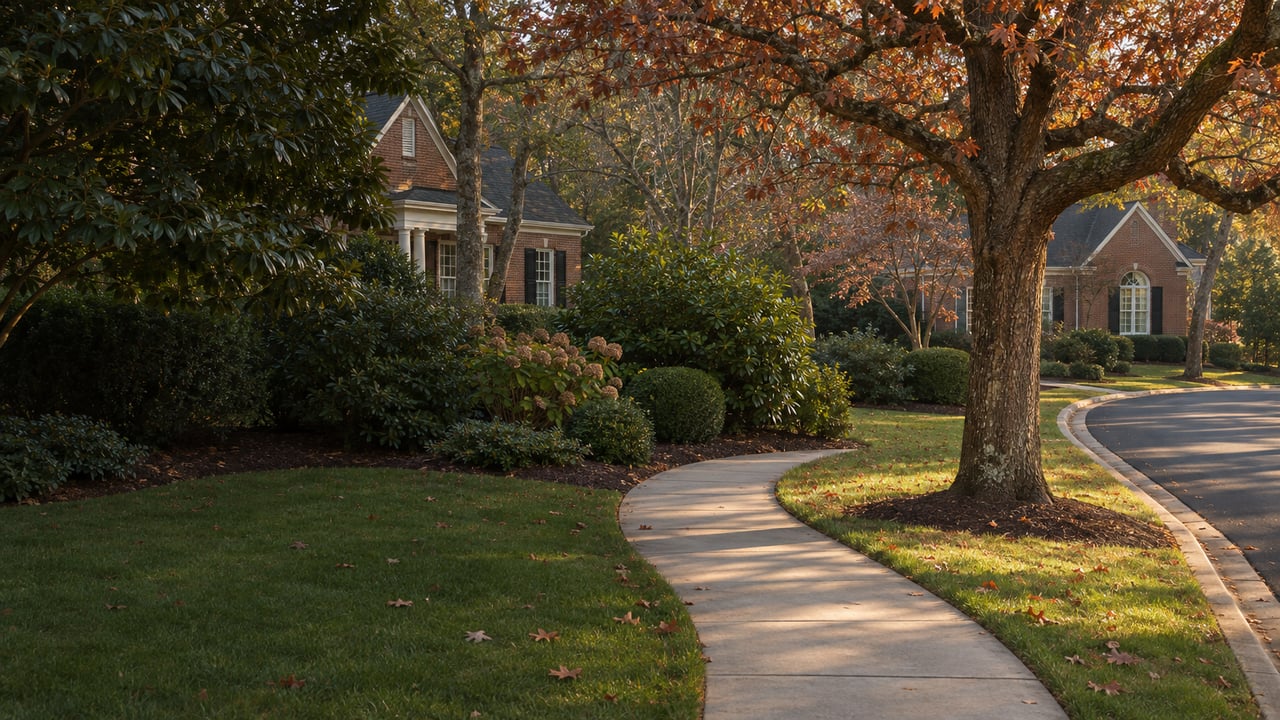
If your goal is to stay close to the urban core, a handful of neighborhoods deserve early attention. These areas are often the best fit for buyers who want shorter drives to downtown, older homes with character, or a more established street feel.
College Hill
College Hill is Greensboro’s oldest neighborhood and first historic district, located immediately west of downtown. It is one of the more accessible close-in options, with Zillow’s current neighborhood value snapshot at $232,791.
This area can be a strong fit if you want charm, centrality, and a neighborhood with history. Since it is a local historic district, exterior changes are more regulated than in non-historic areas, which is important to understand before you buy.
Fisher Park
Fisher Park is one of Greensboro’s locally zoned historic districts and is known for walkability into downtown. Its current average home value is about $383,839, but pricing can vary widely, from more approachable options nearby to seven-figure historic homes.
If you want a premium close-in setting with a broad range of housing, Fisher Park is worth a close look. It is one of the clearest examples of how Greensboro can offer both convenience and architectural character.
Lindley Park
Lindley Park was developed in 1917 as a residential neighborhood centered around a public park. The city describes it as pedestrian-friendly and built around canopy streets and green space, and Zillow’s current average home value is $299,351.
For relocation buyers, Lindley Park often appeals because it feels established and connected without carrying the same formal historic-district constraints as some nearby areas. If you want an older neighborhood feel with everyday livability, this one often makes the shortlist.
Established north-side neighborhoods
North Greensboro has several neighborhoods that work well for buyers who want more space, established surroundings, and a broader spread of price points.
Old Irving Park and New Irving Park
Old Irving Park and New Irving Park are best viewed together as established north-side neighborhoods with a wide pricing range. Current Zillow inventory in Irving Park runs from roughly $279,900 to $2.7M, which shows just how broad the neighborhood can be.
Old Irving Park is about three miles north of downtown, while New Irving Park is about four miles north. These neighborhoods are useful to compare if you want tree-lined streets, established homes, and a location that still keeps you reasonably close to downtown and major daily routes.
Lake Jeanette
Lake Jeanette is a strong north Greensboro option for buyers who want an established setting with a lake-oriented feel. Current examples range from about $259,800 to nearly $1.95M, showing that the area includes both more attainable and more premium pockets.
It also benefits from access to major north-side corridors such as Battleground Avenue and Lawndale Drive. If you want a neighborhood that can flex from practical to upscale, Lake Jeanette is one of the better examples.
Suburban and newer-home options
If you are less focused on downtown proximity and more focused on space, newer product, or community amenities, Greensboro has good suburban choices too.
Adams Farm
Adams Farm is a south/west Greensboro option that makes sense for buyers who want more house for the money and solid highway access. It sits about seven miles west of downtown and about 10 miles southeast of PTI.
Current Zillow examples around $314,300 and $332,800 make it a practical middle-market option. For buyers splitting time between Greensboro, High Point, and the airport corridor, Adams Farm can offer a useful balance of value and location.
Reedy Fork
Reedy Fork is one of the clearest examples of entry-level and newer-construction living in Greensboro. Zillow examples show townhomes around $215,300 to $244,500 and a newer single-family example at $381,900.
This neighborhood helps illustrate one of the key relocation tradeoffs in Greensboro. If you move farther from the core, you may gain newer homes and planned amenities such as a pool, clubhouse, playground, and paved trails.
Sunset Hills
Sunset Hills is one of Greensboro’s earliest suburban developments and a National Register historic district. Zillow’s current average home value is $556,277, with listings ranging from the mid-$400Ks to well above $1M.
This is a strong example of Greensboro’s upper-middle to luxury market. If you want a west-side neighborhood with established appeal and premium pricing, Sunset Hills shows how Greensboro can still feel elevated without matching the price levels of larger metros.
Commutes in Greensboro: what to expect
Greensboro’s citywide mean commute time is 21.7 minutes, which gives you a helpful starting point. In real life, your drive will depend heavily on whether you choose an inner-loop neighborhood, a north-side area, or a more suburban location with highway dependence.
The good news is that many in-town commutes are manageable by North Carolina standards. That is one reason Greensboro works well for buyers who want options but do not want every daily drive to feel like a major project.
Best neighborhoods for shorter downtown drives
If you want the simplest trips into downtown, start with College Hill, Fisher Park, Lindley Park, Old Irving Park, and New Irving Park. College Hill sits immediately west of downtown, Fisher Park is especially convenient for downtown access, and Lindley Park is about four miles west of downtown.
Old Irving Park is about three miles north of downtown, while New Irving Park is about four miles north. These are some of the easiest neighborhoods to position for shorter drives to the city core.
Best areas for highway access
Adams Farm and Reedy Fork are better framed as highway-connected communities. Adams Farm is useful for access toward downtown, High Point, and PTI, while Reedy Fork offers proximity to Highway 29 and Highway 150 and is described as about 15 minutes from Greensboro.
These neighborhoods can make a lot of sense if your work or lifestyle is spread across the Triad rather than centered in downtown Greensboro alone.
Why PTI matters
Piedmont Triad International Airport is one of Greensboro’s major location advantages. The airport sits where I-40, I-85, and I-73/I-74 converge, and the airport authority notes that more than 4.5 million people live within a 90-minute drive.
PTI is not just about flights. It also has a 4,000-acre campus with more than 50 companies and more than 8,600 workers, which helps explain why airport access matters for both employment and convenience.
How to think about schools when relocating
If schools are part of your move, the safest and smartest approach is to verify by exact address. Guilford County Schools uses attendance zones, but the district also offers choice programs, reassignment pathways, and early and middle colleges.
That means a neighborhood name alone is not enough to confirm school assignment. The district’s School Assignment Locator is the most reliable tool, and it already notes boundary changes coming for the 2026-27 school year in several elementary areas.
For relocation buyers, the key takeaway is simple. Once you narrow your home search, check school assignment at the address level before making a final decision.
Lifestyle and amenities in Greensboro
A relocation decision is about more than a house and commute. Greensboro also offers a downtown with parks, museums, and event venues that help round out day-to-day life.
LeBauer Park and Center City Park anchor downtown activity, while the Greensboro Complex hosts major sports and entertainment events about three miles from downtown. The city also offers museums including the Greensboro History Museum, the International Civil Rights Center and Museum, and the Miriam P. Brenner Children’s Museum.
If you like having outdoor escapes nearby, Greensboro also fits well. Pilot Mountain State Park and Hanging Rock State Park give you easy options for hiking, climbing, paddling, camping, and weekend trips without needing to leave the region entirely.
A smart way to narrow your search
When you relocate to Greensboro, the biggest mistake is trying to judge the city by one average price or one quick drive-through. Greensboro is much more neighborhood-specific than that.
A better plan is to narrow your search in stages:
- Start with your commute priorities and daily routine.
- Choose two or three neighborhood clusters that match your budget and home style goals.
- Verify school assignment by exact address if that matters to your move.
- Plan a focused discovery trip that includes one close-in historic area, one suburban value option, and one premium north- or west-side neighborhood.
This kind of approach helps you compare Greensboro in a practical way. You can see how price, commute, and neighborhood feel shift from one part of the city to another without getting overwhelmed.
If you are relocating to Greensboro and want a clear, high-touch plan for comparing neighborhoods across the Triad, Zach Dawson can help you narrow the field, build a smart tour strategy, and move with confidence.
FAQs
What is the typical home price range in Greensboro?
- Greensboro is best described as a range-driven market, with a general core in the mid-$200Ks to low-$300Ks overall, plus neighborhoods that stretch from roughly $200K entry-level options to $650K-plus luxury homes.
Which Greensboro neighborhoods are closest to downtown?
- College Hill, Fisher Park, Lindley Park, Old Irving Park, and New Irving Park are among the neighborhoods most often associated with easier access to downtown Greensboro.
Which Greensboro neighborhoods offer newer homes?
- Reedy Fork is one of the clearest examples for newer homes and townhomes, while Adams Farm is also a useful option for buyers who want a more suburban setting and practical pricing.
How long are commutes in Greensboro?
- Greensboro’s mean travel time to work is 21.7 minutes, though your actual commute will vary by neighborhood, highway access, and time of day.
How should buyers check school assignments in Greensboro?
- Buyers should verify school assignment by exact address using Guilford County Schools’ School Assignment Locator, since boundaries and options can change and may not match a neighborhood name exactly.
Is Greensboro a good fit for Triad commuters?
- Yes. Greensboro’s location within the Triad and its access to major highways and PTI make it a practical choice for buyers who travel across Greensboro, High Point, Winston-Salem, or the airport corridor.